
Planning Toronto home renovations in 2025 and want a fast way to elevate the look and feel of your rooms? Upgrading interior doors and hardware delivers a huge visual and functional improvement without changing your layout. This guide covers door constructions, sound control, sizing and swing planning, pocket and barn door choices, hinge types, finishes, privacy options, and realistic budgets for Toronto homes.
Door construction: solid vs hollow vs MDF
- Solid core (wood or composite): Heavier, more solid feel, better sound control, and crisp edges for paint. The best upgrade for bedrooms, bathrooms, and offices.
- Hollow core: Budget-friendly for closets and secondary spaces. Lighter weight but more noise transfer.
- MDF one‑piece or stile‑and‑rail: Smooth painted finish, stable in Toronto’s humidity swings, excellent for modern shaker profiles.
Sound and privacy you can feel
- Weight matters: Solid core doors with quality weatherstrips reduce sound between rooms.
- Seals and sweeps: Add a perimeter gasket and an undercut or automatic door sweep for home offices, nurseries, and powder rooms.
- Glass lites: If using glass, pick frosted or reeded glass for privacy without losing light.
Sizes, swings, and clearances
- Standard widths: 24, 28, 30, 32, and 36 inches are common. In tight Toronto semis, 28 or 30 inches often fit best.
- Heights: 80 inches is typical; 84 or 96 inches create a premium look in renovations with higher ceilings.
- Swing planning: Keep doors from colliding with fixtures and ensure switches are on the latch side. For small baths, reverse the swing or use a pocket door.
- Jambs and casing: Order jamb depth to match finished wall thickness. Update casing and baseboards so profiles align across the home.
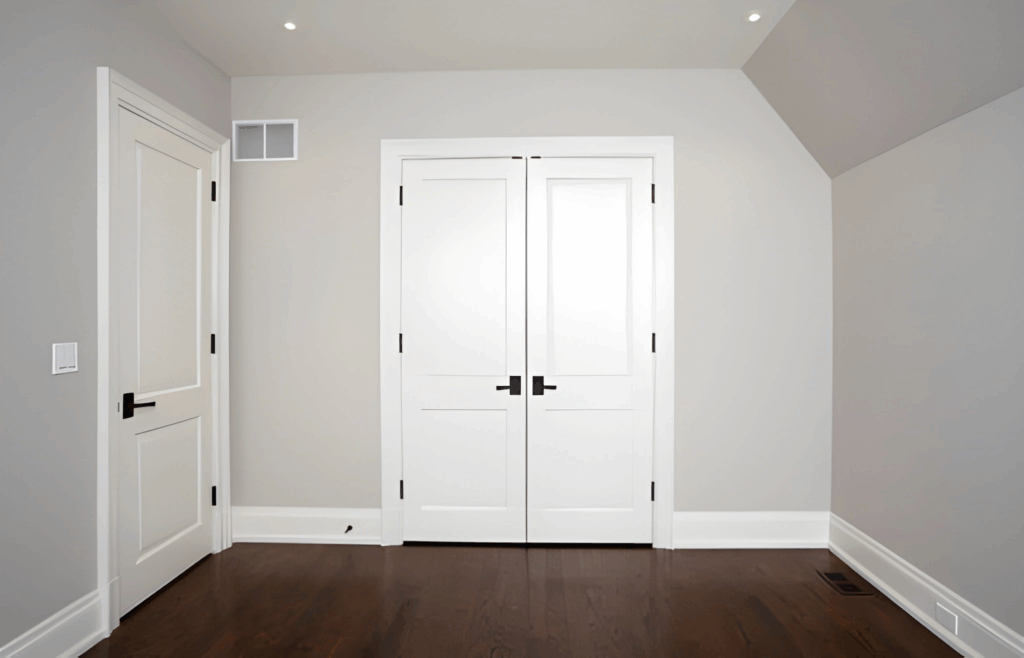
Pocket doors vs barn doors
- Pocket doors: Great space savers for powder rooms and closets. Use a solid core slab, a high-quality soft‑close pocket frame, and a privacy lock designed for pocket doors. Align framing early to avoid wavy walls.
- Barn doors: Stylish and simple to add, but do not seal like a hinged or pocket door. Avoid for bathrooms that need acoustic privacy. Choose a floor guide and soft‑close hardware for smoother travel.
Hardware types and finishes
- Functions: Passage (no lock) for halls and closets; privacy for bedrooms and baths; dummy for double doors; keyed where required.
- Levers vs knobs: Levers are easier to use and meet accessibility preferences.
- Backset and prep: Most Toronto homes use a 2‑3⁄8 inch backset. Confirm bore size and latch type when ordering replacements.
- Hinges: 3 or 4 butt hinges per door, depending on height and weight. Consider ball‑bearing hinges for heavy, solid-core slabs.
- Finishes: Matte black, satin brass, and brushed nickel remain popular. Keep hinges, levers, stops, and pulls consistent for a calm look.
Painting and finishing tips
- Factory primed or prefinished: Saves time on site and improves durability.
- On‑site finishing: Use high-quality primer and enamel or urethane trim paint. Lightly sand between coats and caulk joints for a seamless look.
- Colour strategy: White or soft neutrals keep halls bright. Accent colours on office doors can look sharp with matching hardware.
Safety and special locations
- Garage man door to house: Use a self‑closing, fire‑rated door with proper weatherstripping.
- Basements and utility rooms: Solid core doors with thresholds help with sound and dust control.
- Kid‑friendly: Choose reversible privacy latches with emergency release.
Timelines and budgets in Toronto
Every home is different. These ranges help with early planning:
- Hollow core replacement with new hardware: $250 to $450 per door installed.
- Solid core upgrade with new casing and paint: $500 to $1,000 per door, depending on height and profiles.
- Pocket door conversion with soft‑close frame and privacy lock: $1,200 to $2,500, including framing and drywall repair.
- Barn door with track and soft‑close hardware: $750 to $1,800, depending on slab and track system.
Typical timelines: 1 day for a small swap of 3 to 5 doors, 2 to 4 days for a whole floor with casing and paint, and 2 to 5 days for pocket conversions, depending on tile and plumbing impacts.
Avoid these common mistakes
- Ordering the wrong jamb depth and ending up with proud or recessed casing.
- Mixing hinge finishes with lever finishes so rooms feel mismatched.
- Skipping soft‑close tracks on pocket doors, which makes them slam.
- Using barn doors for bathrooms where privacy is important.
- Forgetting to move light switches to the latch side during a layout change.
How JG Contracting delivers clean door upgrades
- We help you choose slab styles, hardware, and finishes that match your trim and flooring.
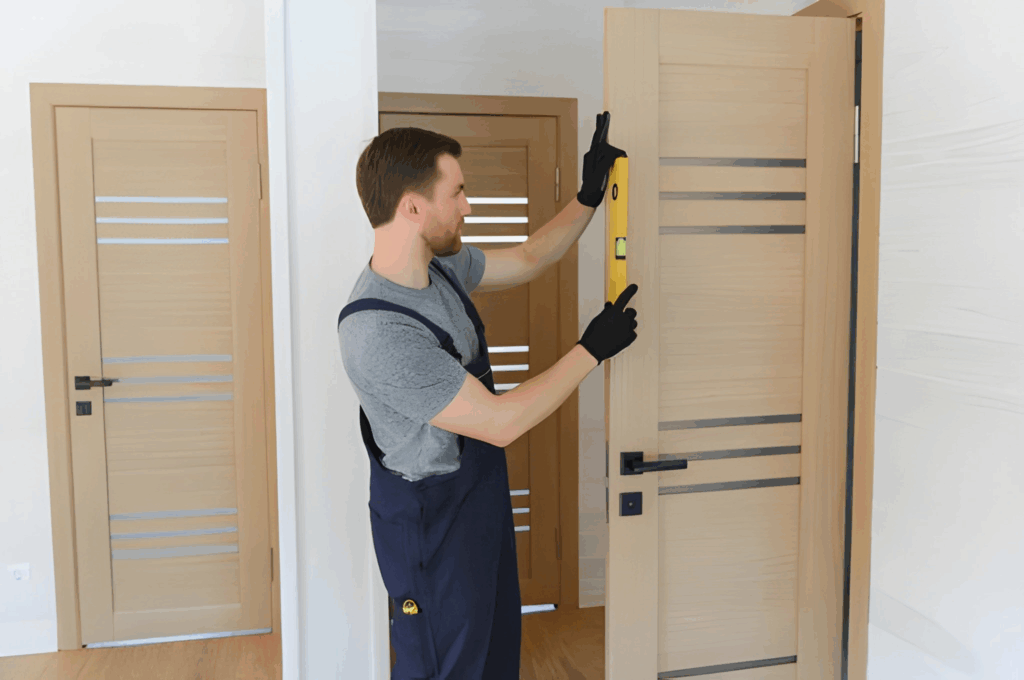
- We measure openings, confirm swing and jamb depth, and order correctly.
- We install with tight reveals, clean caulking, and careful paint touch‑ups.
- We remove old doors, patch hinge mortises where needed, and leave spaces clean and ready to enjoy.
Helpful companion reads on our site:
- Toronto Interior Painting Guide 2025
- Flooring That Survives Toronto 2025
- Soundproofing Guide for Toronto 2025
- Toronto Aging‑in‑Place Renovation Guide 2025
Ready to upgrade your interior doors? Contact us today to book a consultation. We will confirm measurements, show finish samples, and provide a detailed quote with a timeline.
📞 Call us at: 437-259-9632
✉️ Email us at: [email protected]
🌐 Website: https://jgcontractingyyz.com