
Toronto winters put your roof to the test. If you’ve spotted long icicles, wet ceiling spots, or a frosty attic, you’re seeing the classic signs of ice dams and heat loss. The fix isn’t salt or heat cables, it’s designing the attic as a system: airtight, well‑insulated, and properly ventilated. Here’s a practical, contractor‑backed guide for homeowners planning Toronto home renovations in 2025.
Why Ice Dams Happen (in Plain English)
- Warm air leaks from the house into the attic, warming the roof deck.
- Snow melts on the warm upper roof, then re‑freezes at the cold eaves, creating dams that back up water.
- The result: leaks, stains, and mold plus higher energy bills.
Rule #1: Stop air leaks first. Insulation alone can’t fix a leaky lid.
Step 1: Air‑Seal Before You Insulate
Focus on the holes between your living space and the attic:
- Top plates & wire/plumbing penetrations: Foam or sealant + fire‑safe materials where required.
- Recessed lights: Swap to IC‑rated, airtight fixtures or install code‑approved covers before insulating.
- Attic hatch: Weatherstrip, insulate the lid, and add secure latches.
- Bath & kitchen fans: Duct to outdoors (not into the attic) with smooth metal ducting and sealed joints.
- Chases & dropped ceilings: Cap and seal with foam board + sealant.
We document air‑sealing with photos, so you know what changed before insulation goes in.
Step 2: Choose the Right Insulation (and Target R‑Value)
Common upgrade targets in Toronto are R‑50 to R‑60 for flat attics, depending on roof height and access. Options:
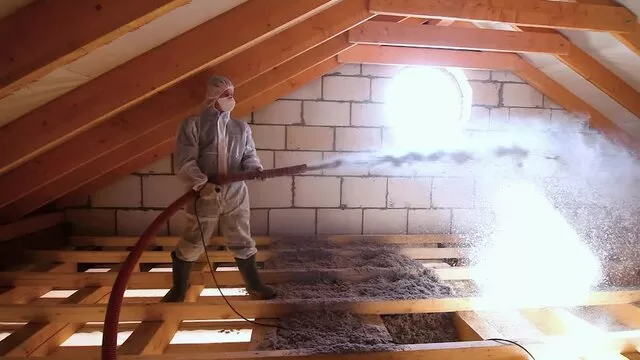
- Blown‑in cellulose: Excellent coverage, good air‑retardancy, value‑friendly for topping up existing batts.
- Blown‑in fiberglass: Clean, light, and stable; great when combined with meticulous air‑sealing.
- Spray foam (strategic use): Ideal at eaves, knee walls, and tricky transitions; can also create an unvented, conditioned roof in tight cathedral sections when engineered correctly.
Baffles first: Install vent chutes at every rafter bay before blowing insulation to keep soffits clear.
Step 3: Ventilate the Roof Deck Properly
Ventilation removes moisture and keeps the roof deck cold:
- Soffit intake + ridge vent exhaust is the gold standard for gable roofs.
- Where ridge vents aren’t possible, use high-capacity roof vents or gable vents sized to the intake area.
- Clear soffits: Old insulation often blocks them; baffles maintain a clear air path from the eaves.
Ventilation is not a band‑aid for poor air‑sealing; it works with it.
Step 4: Moisture Management & Healthy Air
- Keep indoor RH near 35-45% in winter to reduce condensation risk.
- Upgrade to quiet, ducted bath fans on timers or humidity sensors.
- Consider an HRV/ERV to balance fresh air with energy efficiency.
- Insulate and air‑seal attic ductwork to prevent condensation and losses.
Special Cases: Dormers, Knee Walls & Cathedral Ceilings
- Knee walls & half‑storeys: Treat the sloped ceiling, short wall, and floor behind the wall as part of the building envelope; many need spray foam plus rigid foam and sealed access doors.
- Cathedral ceilings: Use vent channels from soffit to ridge with dense insulation below, or design an unvented assembly with spray foam; both require careful detailing.
- Skylights & can lights: These are thermal hot spots; air‑seal rigorously, and increase insulation around them where allowed.
Signs You Need an Attic Upgrade
- Icicles longer than 15-20 cm or thick ice at the eaves
- Uneven snow melt on the roof after cold nights
- Musty attic, visible frost on nails, or darkened sheathing
- Upstairs rooms are too hot in summer, too cold in winter
- Recent roof leaks near exterior walls despite a newer roof
Budget & Timeline (Order‑of‑Magnitude)
Every home is unique, but these ballparks help with planning:
- Good (Air‑seal + Top‑Up): Targeted air‑sealing, baffles at eaves, blown‑in cellulose/fiberglass to R‑50+. From low‑$ thousands.
- Better (Comprehensive Upgrade): Extensive air‑sealing, full baffle install, hatch rebuild, bath fan ducting to exterior, deeper insulation. From mid‑$ thousands.
- Best (Complex Roofs): Knee wall suites, cathedral sections with spray foam, duct insulation, and ventilation improvements. From higher‑$ thousands.
Typical On‑Site Time: 1-3 days for standard attics; complex roofs take longer, especially with ventilation retrofits and drywall repairs.
FAQs
Do I need a new roof to fix ice dams?
Not necessarily. If shingles are sound, fixing the attic air‑seal/insulation/ventilation often solves the problem.
Will heat cables solve it?
They melt channels but don’t fix the cause. We use them only as a temporary measure or on hard‑to‑retrofit edges.
Can we do this in winter?
Yes, air‑sealing and blown‑in upgrades are winter‑friendly, though ventilation work may wait on the weather.
Will this help with the summer heat upstairs?
Absolutely. A tight, well‑insulated attic keeps heat out in summer and in during winter.
Ready to Keep Your Roof Clear and Your Home Cozy?
Let’s assess your attic, design the right upgrade, and stop ice dams at the source. Book a consultation today with JG Contracting, your local partner for Toronto home renovations.
📞 Call us at: 437-259-9632
✉️ Email us at: [email protected]
🌐 Website: https://jgcontractingyyz.com